The organisations getting the most from AI are not the ones with the most agents. They are the ones with the right humans in the workplace directing them. As AI adoption accelerates across UK businesses, the gap between technology deployment and human capability is becoming one of the most costly strategic risks a CEO or founder can ignore. Without a deliberate AI workforce strategy, the gap between what your technology can do and what your people can handle will cost you more than you expect.
The return on getting your people strategy right has never been higher
Humans in the workplace are not becoming less valuable as AI scales — they are becoming the primary determinant of whether AI investment delivers a return or creates a liability. An AI workforce strategy is not an HR project, it is a commercial decision that determines whether your AI investment delivers a return or creates a liability.
The organisations generating real commercial outcomes from AI share a common characteristic. They did not just buy the technology. They built the human capability around it to make it work. That is where the return lives. Not in the tool, in the people directing it.
According to the British Chambers of Commerce report, approximately one in five businesses that have adopted bespoke AI have already restructured job roles as a result. Those same businesses are roughly three times more likely to have restructured than general AI adopters. Structural change is accelerating. The question for any business leader is whether that restructuring is deliberate and strategic — or reactive and costly.
The organisations that make it deliberate are the ones with a clear view of what their humans need to own, decide, and oversee in an AI-driven operation. That clarity is what separates growth from disruption.
The risk that is growing inside UK businesses right now
The most urgent risk facing UK business leaders is not that AI will replace their people, it is that they will restructure their workforce around AI without the strategy to do it safely, legally, or effectively.
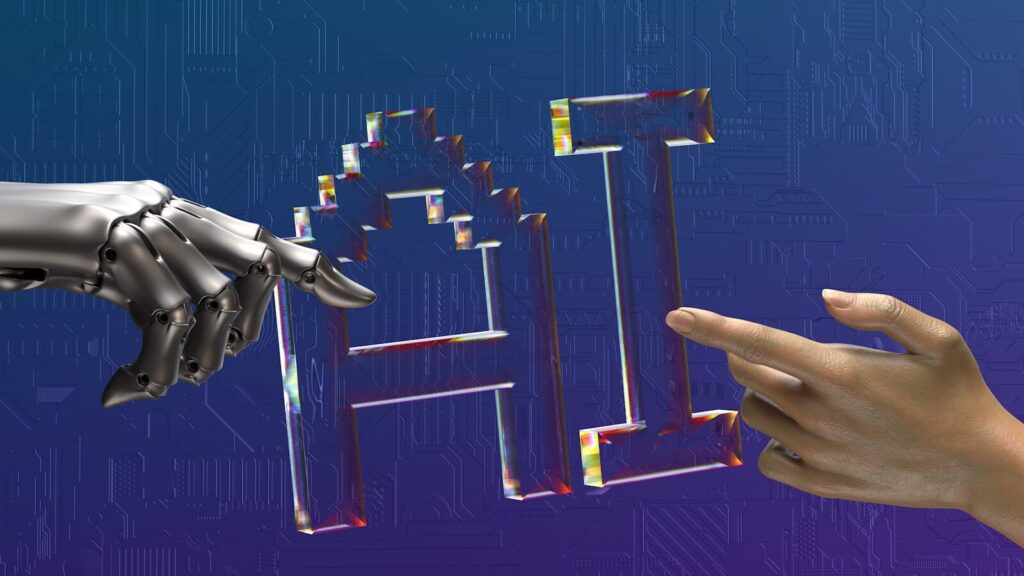
The CIPD’s Autumn 2025 Labour Market Outlook surveyed over 2,000 UK employers. One in six expected AI to reduce their headcount within the next 12 months. Of those expecting cuts, 62% identified clerical, junior managerial, professional, and administrative roles as most at risk.
Consider what that means in practice. Organisations are planning to remove the humans in the workplace who currently carry out a significant proportion of their operational work, without a clear picture of what replaces that human judgement, relationship management, and institutional knowledge.
Removing people is easy. Knowing which people to keep, which roles to redesign, and which capabilities your organisation cannot function without, that is the hard part.
The Employment Rights Act 2025 adds a further layer of risk. Workforce changes that are not managed carefully expose businesses to legal challenge, reputational damage, and the loss of the very people they need most. The CIPD’s February 2026 Labour Market Outlook found that more than half of employers expect a rise in workplace conflict from one or more elements of the Act.
Humans in the workplace are not a line item to optimise around AI. They are a legal, commercial, and operational responsibility, and the stakes for getting this wrong are rising.
One in four large private sector firms expects headcount to fall because of AI in the next 12 months (CIPD, 2025). Of those expecting reductions, 26% anticipate losing more than 10% of their total workforce. Restructuring at that scale, without a talent strategy to underpin it, is one of the most expensive mistakes a business can make.
The businesses most exposed right now are the ones deploying AI without an AI workforce strategy to underpin it, and the data shows there are a significant number of them.
 Why AI agents make humans more important, not less
The faster AI agents multiply inside an organisation, the more critical humans in the workplace become, because someone has to direct them, govern their outputs, and take accountability when something goes wrong.
AI agents do not exercise judgement. They execute. They do not take responsibility for outcomes. They do not manage the client who is unhappy with a decision the agent made. They do not rebuild the team dynamic when an automated workflow removes a role people depended on.
Every AI agent deployed inside a business creates a corresponding human requirement, for oversight, for governance, for the kind of contextual decision-making that no model is built to perform. Organisations that ignore this are not becoming leaner. They are accumulating invisible risk.
The British Chambers of Commerce noted in April 2026 that Britain’s workforce is not ready for what is coming. The pace of AI adoption, 54% of UK firms actively using AI in 2026, up from 23% in 2023, is outrunning the organisational capability to manage it. That gap is where the commercial damage happens.
Every agent you deploy without an AI workforce strategy sitting behind it is a commercial risk your balance sheet will eventually feel.
Frequently asked questions
Why are humans in the workplace more important than ever as AI grows?
AI agents execute tasks but cannot exercise judgement, take accountability, or manage the human consequences of automated decisions. As AI deployment scales, the need for humans in the workplace to direct, govern, and own outcomes grows in proportion. The organisations delivering the strongest returns from AI are the ones with the clearest human capability strategy sitting underneath it.
What does the data say about AI’s impact on UK workforces?
What is the biggest risk for UK CEOs and founders adopting AI?
What does a talent strategy consultant do in the context of AI workforce change?
How should a UK business leader approach workforce strategy as AI scales?

Helping Founders, CEOs and business leaders build, structure, and scale their business without the legal and financial cost of getting it wrong